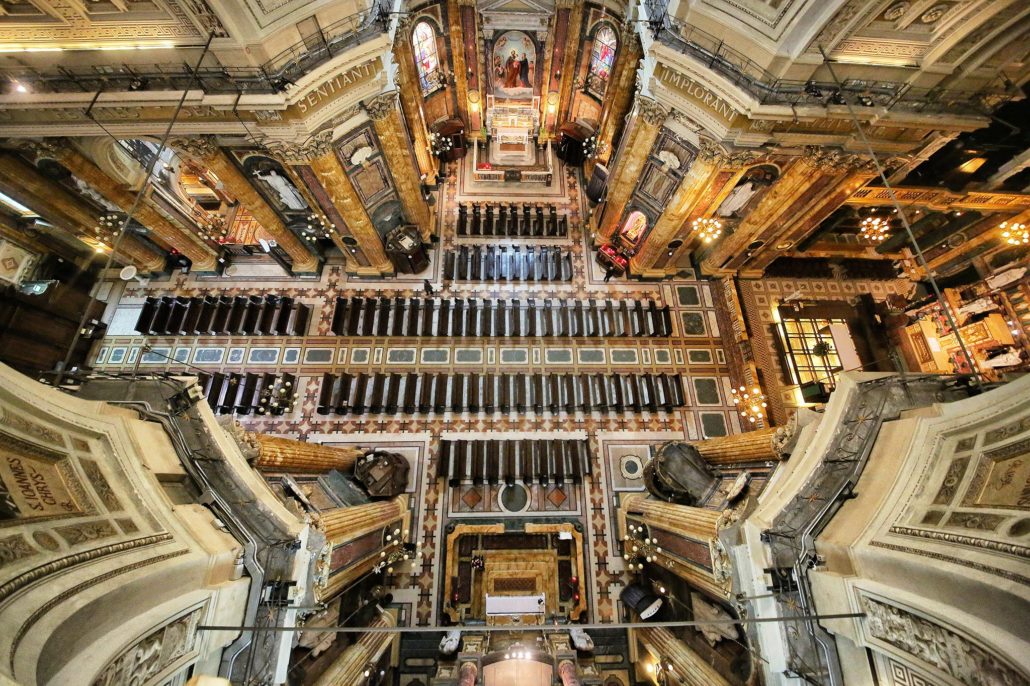
Basilica Maria Ausiliatrice
L’idea, l’architettura e la devozione a Maria

L’idea, l’architettura e la devozione a Maria
“La seconda Domenica di ottobre di quell’anno (1844) doveva partecipare a’ miei giovanetti, che l’Oratorio sarebbe stato trasferito in Valdocco. Ma l’incertezza del luogo, dei mezzi, delle persone mi lasciavano veramente sopra pensiero. La sera precedente andai a letto col cuore inquieto. In quella notte feci un nuovo sogno, che pare un’appendice di quello fatto la prima volta ai Becchi quando aveva circa nove anni…
…Io voleva andarmene, perché mi sembrava tempo di recarmi a celebrare la S. Messa, ma la pastorella mi invitò a guardare al mezzodì. Guardando, vidi un campo, in cui era stata seminata meliga, patate, cavoli, barbabietole, lattughe e molti altri erbaggi. – Guarda un’altra volta, mi disse. E guardai di nuovo, e vidi una stupenda ed alta Chiesa. Un’orchestra, una musica istrumentale e vocale mi invitavano a cantar messa. Nell’interno di quella Chiesa era una fascia bianca, in cui a caratteri cubitali stava scritto: HIC DOMUS MEA, INDE GLORIA MEA”.

Nell’evoluzione mariana di don Bosco, dopo la Madonna Consolata e Immacolata, giungiamo alla devozione a Maria Ausiliatrice.
L’idea della costruzione di una maestosa chiesa in onore di Maria Santissima nasce dall’apparente esigenza di accogliere un maggior numero di fedeli. Ma non sono soltanto contingenze storiche determinarono la scelta di don Bosco. Egli sente il titolo prescelto come il più adatto ad esprimere la sua riconoscenza alla Vergine per i tanti “aiuti” ricevuti e, insieme, per invocarne la protezione sulla nascente Congregazione.
C’è inoltre in don Bosco una forte sottolineatura pastorale e pedagogica: Maria è aiuto nel cammino della vita per vincere gli assalti del peccato, per essere liberati da ogni forma di male (spirituale, morale e fisico) e soprattutto per attuare il bene.
Don Bosco, pur senza una minima base economica, è convinto che «è la Madonna che vuole la Chiesa; essa penserà a pagare».
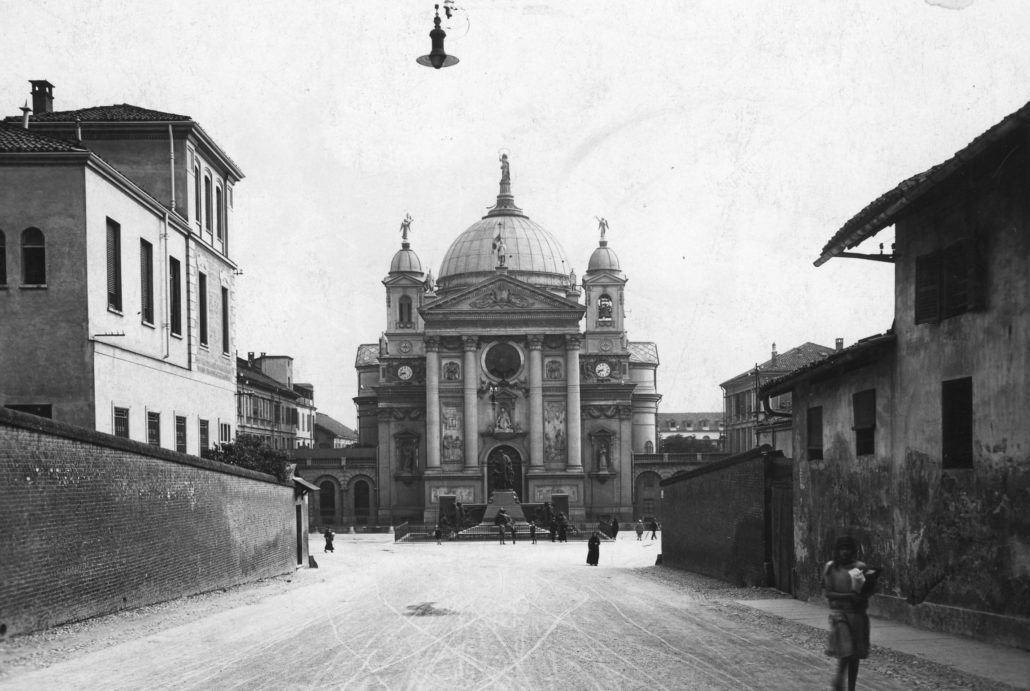
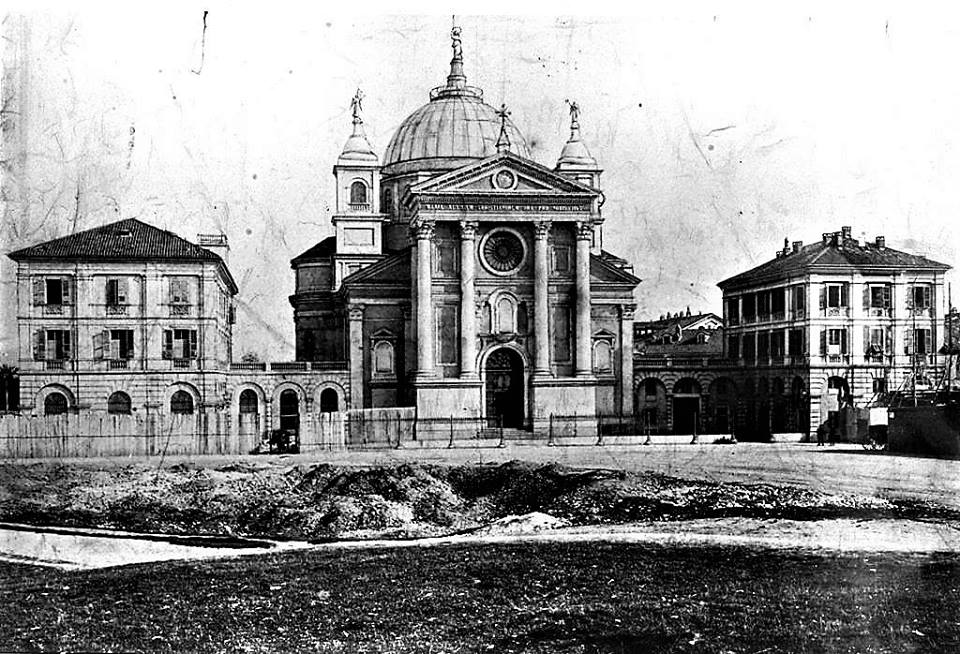
Il Santuario costruito da don Bosco, a croce latina, si presentava molto sobrio e spoglio, senza marmi e decorazioni sulle pareti. Anche l’unica cupola era imbiancata a calce.
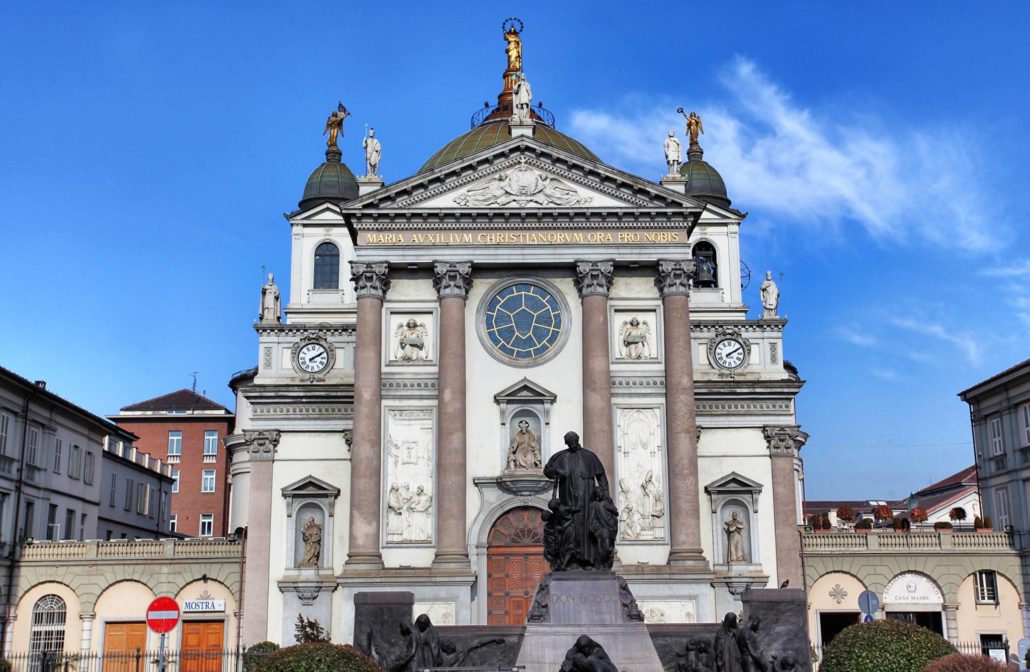
L’architetto Spezia si ispirò alla facciata di san Giorgio Maggiore in Venezia disegnata dal Palladio.All’interno della Basilica, oggi troviamo: l’Altar maggiore, il quadro dell’Ausiliatrice, le Cupole maggiore e minore, le due cappelle laterali del presbiterio, le tribune sulle cappelle laterali, la galleria dietro l’altar maggiore, la sacrestia e la Statua dell’Ausiliatrice.
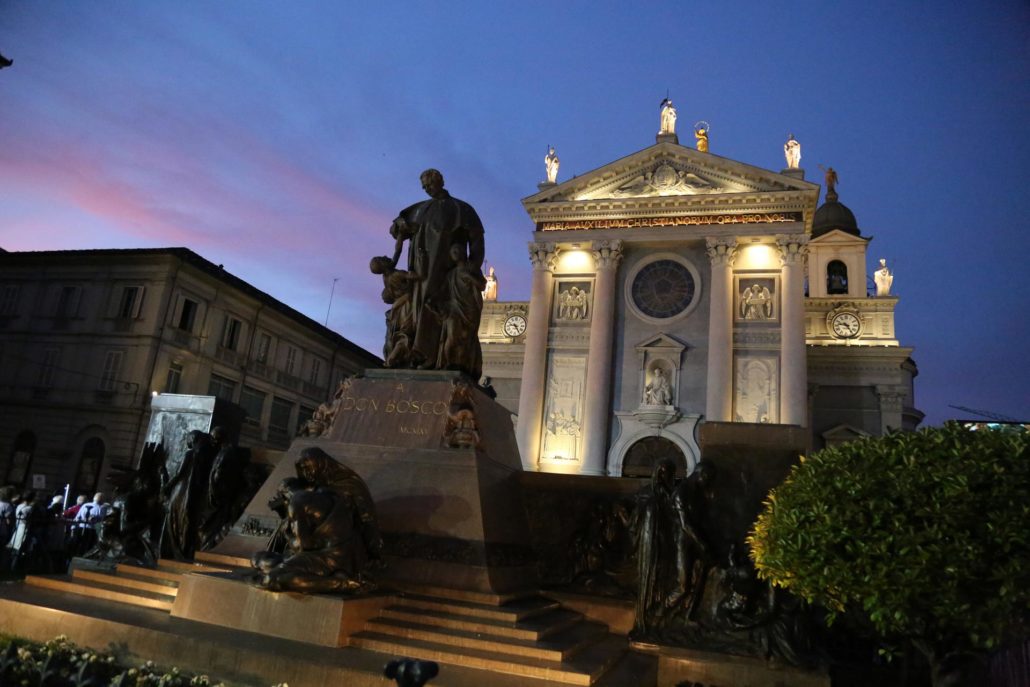
Così dicendo, avanzavo un piede posandolo sul luogo dove avvenne il martirio e me lo indicò con precisione… Intanto io mi vidi circondato da un numero immenso e sempre crescente di giovani; ma guardando la Signora, crescevano anche i mezzi ed il locale, e vidi poi una grandissima chiesa, precisamente sul luogo dove mi aveva fatto vedere che avvenne il martirio dei santi della Legione Tebea, con molti edifici tutto all’intorno e con un bel monumento nel mezzo”. (Il monumento davanti al Santuario c’è ed è proprio per… lui!).
Le tappe erano dunque tutte previste: prima “la chiesa piccola e bassa”ossia la cappella Pinardi nel 1846; poi “l’altra chiesa assai più grande…” ossia la Chiesa di S. Francesco di Sales nel 1852 e infine la chiesa di Maria Ausiliatrice con “all’interno una fascia bianca, con la scritta a caratteri cubitali: “Hic domus mea, inde gloria mea”: Qui è la mia Casa, di qui la mia gloria.
Il desiderio di ubbidire alla voce della Madonna e di testimoniare venerazione e riconoscenza a Lei che aveva dato tante prove di benevolenza alla nascente Congregazione, ed anche ragioni di ordine pastorale e pratico, spinsero Don Bosco ad affrettare i tempi della costruzione.
Intanto, per l’acquisto del campo e del legname per la recinzione si erano spese 4.000 lire; l’economo Don Savio, rimasto senza soldi, consigliava di aspettare, ma Don Bosco gli replicò:
“Comincia a fare gli scavi; quando mai abbiamo cominciato un’opera avendo già i denari pronti? Bisogna bene lasciar fare qualcosa alla Divina Provvidenza”.
I lavori, affidati all’impresa del capomastro Carlo Buzzetti, iniziarono nell’autunno del 1863. Terminati gli scavi, nell’aprile del 1864, Don Bosco disse al Buzzetti: “Ti voglio dare subito un acconto per i grandi lavori“. Così dicendo tirò fuori il borsellino, l’apri e versò nelle mani di Buzzetti quanto conteneva: otto soldi, nemmeno mezza lira.
“Sta’ tranquillo la Madonna penserà a provvedere il denaro necessario per la Sua chiesa”.
Finalmente il 9 giugno 1868, aveva luogo la solenne consacrazione. Furono momenti di commozione intensa per tutti. Il sogno era diventato realtà. La “stupenda ed alta chiesa” era sotto gli occhi di tutti, cresciuta come per miracolo.
Da parte sua, Don Bosco non si attribuiva alcun merito: “Io non sono – diceva – l’autore delle grandi cose che voi vedete: è il Signore, è Maria SS. che degnarono di servirsi di un povero prete per compiere tali opere. Di mio non ci ho messo nulla. Aedificavit sibi domum Maria. E’ Maria che si è costruita la sua casa. Ogni pietra, ogni ornamento segnala una grazia”.
Costruito il santuario, Don Bosco intensificò la sua azione per diffondere nel mondo la devozione alla Madonna Ausiliatrice, Aiuto dei Cristiani.
È possibile visitare la Basilica di Maria Ausiliatrice tutti i giorni dalle ore 8:00 alle 19:00, compatibilmente con le celebrazioni eucaristiche o momenti di preghiera richiesti dai gruppi.